The Economist's Technology Quarterly from December has a fascinating article about vertical farming. At its simplest, vertical farming requires a bit of rooftop and some hydroponic equipment. Eventually, and perhaps sooner rather than later, high-rise farm buildings could crop up in cities around the world. With the world population set to increase to 9.1 billion by 2050, we're going to need methods like vertical farming to feed everyone. According to the Economist, Professor Dickson Despommier of Columbia University in New York is the "progenitor" of vertical farming. Professor Despommier's recently published book, The Vertical Farm, has received mixed reviews, which is to be expected -- the book is a sociological manifesto, after all. Still, from what I see on Amazon's page the book is lovely, with several futuristic imaginings of vertical farm buildings. I think one of the main selling points for me to see this type of technology flourish is the ability for a vertical farm to provide local food to urban dwellers. Cities of a certain size can rarely support themselves from their local environs. Vertical farming would return that ability to the urban environment. New York city could become a world breadbasket. I think that is astounding, and I think I'll pick up Professor Despommier's book and judge his opinions for myself.
P.S. The Babbage Blog on the Economist's site also has this: Three views of the vertical farm
Wednesday, January 5, 2011

Tuesday, January 4, 2011
Social Media and the Classroom
I sat down tonight to do some work on my syllabi for the spring semester. As I did so, and as I juggled through the traditional types of assignments, I began to wonder if there was a place for social media in my classroom. I don't think individual courses should have their own Facebook pages or Twitter feeds, but maybe there is another way that those platforms could be useful. Then there are podcasts, video streams, and blogs, all of which have proven applications in the classroom. What do you think, tech-savvy friends? Would you like to have had social media in your courses? If a teacher, have you used social media effectively?
Monday, January 3, 2011
The Fruit Stage
Thorn was "Bluebaby" before we knew his gender; today, we continued in the tradition of berry-naming the fruit of our loins by dubbing our Christmas surprise baby the "Raspbaby." We had the Raspbaby's first ultrasound earlier today. For all the surprise and worry and anticipation the wee creature caused us, the Raspbaby looked very content, nestled right in the center of my womb, with full knowledge of a right to existence. Relief flooded through us at the baby's strong heart: 164 beats per minute, to be exact. Right on schedule developmentally, which puts the baby's due date around August 11th. I'm tempted to say this is a girl already, since Thorn was always a week ahead developmentally, even though we knew his conception date. He came three weeks early, and was already over seven pounds when he was born. In contrast, I, a girl, was a very small baby: a little over five pounds. But there are many factors influencing development. I weigh over ten pounds less now than I did when I conceived Thorn, and a heavier mother tends to make for larger babies. Anyway, as we've told all and sundry, we do not care about the gender, really. We just want to move beyond the fruit stage and start using a real name! Is it a little K or a little V? Come back in early March, and we'll let you know.
Hello Baby...
I don't know your name yet, and I wasn't expecting to see you so soon, but I'm glad you're here. We were very worried for a time that you wouldn't be a baby, but now we've seen you. You are so little, barely bigger than a garbanzo bean, and yet your heart beats with vigor. You have short, stubby arms and tiny fingers. There is a still a bit of a tail on you, my littlest one, but that will go away. Your mother and I are so blessed to have you. Some part of me never thought I'd have more than one child. Thank you for proving that part of me wrong. I love you already, my little lion.
Sunday, January 2, 2011
Book Recommendations from 2010
Once more I am vanquished by my own contest. We have had this challenge of reading fifty books each year for the last three, but I never quite make it. Fox has made it twice. To count a book must be read from cover to cover. Twenty-nine books were thus read by me, and this year I will endeavor to begin again. I even have a new and shiny book journal to help me. Looking back at 2010, however, I see a few books from my 29 that I would recommend.
 My favorite book in 2010 was this slim volume by Jonah Lehrer. It explores the decision-making capabilities of the human brain. Mr. Lehrer opened my eyes to a world of cognitive science that I was completely ignorant of. I never realized how chaotic, how terribly random so many of my choices were, and I also never realized how beholden I am to my brain's chemistry. This was a terrific read, utterly fascinating, and one of the very few books that I can actually see myself re-reading in the future.
 This book changed my dissertation project. In fact, if it were not for this book, I think that my dissertation would be in a more tenuous position. More important than that, however, is how this book helped me to remember the strength of a child's aesthetic life, and the power of the young imagination. Watching Thorn grow and learn, observing him while he plays and imagines, are now vigorous moments for me. I have taken to heart Spitz' caution not to let these early encounters with wonder pass me by, and to do my very best to foster a sense of wonder in my child.
A dear friend recommended this book to me, and I am indebted to her for it. Set in an Israel both mythical and historical, it is the tale of a small village and the complicated lives of the families who call it home. I adored Shalev's tale, and I'm told that it is even better in the original Hebrew. Mysticism, so-called magical realism, abounds, as do the grittier, uglier details of human existence. I hunger for more Shalev, and so look for more recommendations of his work in 2011.
Book Rants
Apologetics Bible Rant:
Hey, article-writers in my apologetics Bible. I'm getting a bit annoyed at your setting up postmodernism as the straw man, using the most extreme of its arguments to characterize it (no one can truly know anything), and then using postmodernist deconstruction and historical point-of-view to prove your points. Please acknowledge that postmodernism has and does inform current historical methods, including the ones you're using.
Pornland Rant:
To Gail Dines: not all of your readers are going to be liberal feminists. Some are moderate or conservative feminists, who may not agree with your usage of politically-charged metaphors. Don't alienate your allies.
Also, you are not up to date on women's usage of the Internet. There are more women on the 'net than men, and roughly half of porn viewers are women. Please add five or six more chapters to your book to deal with this.
/Rant
Hey, article-writers in my apologetics Bible. I'm getting a bit annoyed at your setting up postmodernism as the straw man, using the most extreme of its arguments to characterize it (no one can truly know anything), and then using postmodernist deconstruction and historical point-of-view to prove your points. Please acknowledge that postmodernism has and does inform current historical methods, including the ones you're using.
Pornland Rant:
To Gail Dines: not all of your readers are going to be liberal feminists. Some are moderate or conservative feminists, who may not agree with your usage of politically-charged metaphors. Don't alienate your allies.
Also, you are not up to date on women's usage of the Internet. There are more women on the 'net than men, and roughly half of porn viewers are women. Please add five or six more chapters to your book to deal with this.
/Rant
Saturday, January 1, 2011
New Year's Resolutions
Last post of the day! This one is simple, and possibly the one I ought to have done first (uh oh, guilt already!): New Year's resolutions.
1. More Bible-reading, in addition to comparative religious study. I just got an awesome apologetics Bible from my parents-in-law, so I'm reinvigorated.
2. Eat properly and work out. Which I did do this past year, but it's the sort of thing you have to re-commit to when the holidays roll around, neh?
3. Submit at least one story for publication per month, once my editing contract is over.
4. Get my take-home exams to Dr. G so I can finally seal the deal on that lingering degree.
5. Assist Sparrow in his dissertation work. One chapter will be done by the end of the Spring semester.
I make resolutions every year. And I do see improvement over time. After all, I haven't vowed to "do everything perfectly" this year, as I did when I was (much) younger. I guess I'll have to re-visit this post and see if I've done all I vowed by year's end. I think I can!
What have you vowed for 2011?
1. More Bible-reading, in addition to comparative religious study. I just got an awesome apologetics Bible from my parents-in-law, so I'm reinvigorated.
2. Eat properly and work out. Which I did do this past year, but it's the sort of thing you have to re-commit to when the holidays roll around, neh?
3. Submit at least one story for publication per month, once my editing contract is over.
4. Get my take-home exams to Dr. G so I can finally seal the deal on that lingering degree.
5. Assist Sparrow in his dissertation work. One chapter will be done by the end of the Spring semester.
I make resolutions every year. And I do see improvement over time. After all, I haven't vowed to "do everything perfectly" this year, as I did when I was (much) younger. I guess I'll have to re-visit this post and see if I've done all I vowed by year's end. I think I can!
What have you vowed for 2011?
Women as Pastors; Women as Wives
"903.5. Women in Ministry," Manual 2009-2013, Church of the Nazarene:
The purpose of Christ's redemptive work is to set God's creation free from the curse of the Fall. Those who are "in Christ" are new creations (2 Corinthians 5:17). In this redemptive community, no human being is to be regarded as inferior on the basis of social status, race, or gender (Galatians 3:26-28).
Acknowledging the apparent paradox created by Paul's instruction to Timothy (1 Timothy 2:11-12) and to the church in Corinth (1 Corinthians 14:33-34), we believe interpreting these passages as limiting the role of women in ministry presents serious conflicts with specific passages of scripture that commend female participation in spiritual leadership roles (Joel 2:28-29; Acts 2:17-18; 21:8-9; Romans 16:1, 3, 7; Philippians 4:2-3), and violates the spirit and practice of the Wesleyan-holiness tradition. Finally, it is incompatible with the character of God presented throughout Scripture, especially as revealed in the person of Jesus Christ.
If Nazarenes can interpret Paul with this sort of nuance regarding ministry, why do I still hear the same stone age preaching about men ruling the spiritual household in marriage from Nazarene pastors and teachers? Those admonitions regarding women in marriage come from the same Pauline letters as the admonitions regarding women in the church. The Manual says women can be pastors, and therefore lead a church. Are pastors therefore saying that because women are female, they cannot use a spiritual gift of leadership in the home? What if the man has no gift for spiritual leadership? Does he lead by virtue of his penis?
I have seen this passage from Genesis used as a reason for gender division in marriage:
Your desire will be for your husband, and he will rule over you. (Genesis 3:16, to Eve)
But this is a CURSE, people! This is part of the Fall of Humanity. The Manual clearly states that being Christian frees us from the curses of the Fall. Why, then, did I see this verse used in church as an insight about marriage?
Marriage is a partnership. There is no rule, save that of God. Women don't need an intermediary between their souls and Christ. And children don't need all members of the household to have a penis in order to lead them spiritually. There is no "obey" clause in a Nazarene wedding service, and there shouldn't be an "obey" implication in Nazarene sermons.
The purpose of Christ's redemptive work is to set God's creation free from the curse of the Fall. Those who are "in Christ" are new creations (2 Corinthians 5:17). In this redemptive community, no human being is to be regarded as inferior on the basis of social status, race, or gender (Galatians 3:26-28).
Acknowledging the apparent paradox created by Paul's instruction to Timothy (1 Timothy 2:11-12) and to the church in Corinth (1 Corinthians 14:33-34), we believe interpreting these passages as limiting the role of women in ministry presents serious conflicts with specific passages of scripture that commend female participation in spiritual leadership roles (Joel 2:28-29; Acts 2:17-18; 21:8-9; Romans 16:1, 3, 7; Philippians 4:2-3), and violates the spirit and practice of the Wesleyan-holiness tradition. Finally, it is incompatible with the character of God presented throughout Scripture, especially as revealed in the person of Jesus Christ.
If Nazarenes can interpret Paul with this sort of nuance regarding ministry, why do I still hear the same stone age preaching about men ruling the spiritual household in marriage from Nazarene pastors and teachers? Those admonitions regarding women in marriage come from the same Pauline letters as the admonitions regarding women in the church. The Manual says women can be pastors, and therefore lead a church. Are pastors therefore saying that because women are female, they cannot use a spiritual gift of leadership in the home? What if the man has no gift for spiritual leadership? Does he lead by virtue of his penis?
I have seen this passage from Genesis used as a reason for gender division in marriage:
Your desire will be for your husband, and he will rule over you. (Genesis 3:16, to Eve)
But this is a CURSE, people! This is part of the Fall of Humanity. The Manual clearly states that being Christian frees us from the curses of the Fall. Why, then, did I see this verse used in church as an insight about marriage?
Marriage is a partnership. There is no rule, save that of God. Women don't need an intermediary between their souls and Christ. And children don't need all members of the household to have a penis in order to lead them spiritually. There is no "obey" clause in a Nazarene wedding service, and there shouldn't be an "obey" implication in Nazarene sermons.
Resolved
I have never had much interest in year-end or year-beginning celebrations. One day is much like another, and I do not see why the 31st of December should receive more excitement than the 22nd of August or the 3rd of May. Still, at this time of year, in order not to seem a total curmudgeon, I do make a habit of writing out a little list of resolutions. Most are banal, but some will add value to my future days.
1. Successfully complete the 2011 Fifty Book a Year challenge.
2. Submit two chapters of my dissertation to my advisors.
3. Write something daily.
4. Continue to curb annoying web-surfing habits.
5. Maintain organizational systems put in place during 2010.
6. Improve organizational systems put in place during 2010.
7. Lose 20 pounds.
8. Take more pictures of Thorn.
9. Keep book journal.
10. Write Fox letters.
11. Cook at home more.
12. Use each of my cooking gadgets at least once this year.
13. Get my borrowed library books under 100.
14. Host a game night once every other month.
15. Look for ways to be more innovative in the classroom.
Books of 2010
It's the first day of January, in an infant new year. I need to oil that precious baby rump with new words, so here they are.
Let's begin with books. I reached my goal of fifty this past year, which made me very happy. I credit Thorn for making it impossible for me to do anything other than read, and my husband, who shares my dislike of television, which sucks away reading time (not to mention IQ). With such bolstering influences, the books appeared, one after the other, on my list. I read history the most (12 books), followed by fantasy (10). Still, for all the fantasy I read, there are only two I'd heartily recommend from this year, on par with my two sci-fi suggestions. Here are my top eleven:
Sons, by Pearl S. Buck
Pearl Buck is the most widely translated American author. Her childhood was spent in China, and the authenticity of her experience, coupled with her keen awareness of the grayness of mankind, make her books wonderful reads. This is the sequel to her better-known novel, The Good Earth.
The Summer of the Great-Grandmother, by Madeline L'Engle
One of Madeline L'Engle's collections of diary entries, this one covering the year her mother sickened and died. It is a very honest account, describing what many of my peers may not be willing to look at: the progress of old age. For all that this book made me cry, L'Engle's faith blunts the edge of the suffering, and her recollection of memories helps the reader form a better idea of L'Engle as an author.
The Three Musketeers, by Alexandre Dumas
Classic. I re-read it this year because I loved it so.
Orthodoxy, by Gilbert K. Chesterton
While some of the references in this work are outdated, Orthodoxy remains one of the best Christian apologetic works which simultaneously applauds reason and imagination. My favorite parts deal in faith of a sort long-term Christians in a logical world easily forget: the first love, the wonder of a child, and the joy behind creation. Just be aware that Chesterton grew up in an age of Ciceronian education, and he therefore uses invective more than would be comfortable to a 21st-century reader.
The River of Doubt: Theodore Roosevelt's Darkest Journey, by Candice Millard
The title alone was so sexy I had to read it immediately, and then bought it for my father. This book regards Roosevelt's expedition down an uncharted tributary of the Amazon following his final election loss.
Byzantium: The Surprising Life of a Medieval Empire, by Judith Herrin
Everyone should learn more about Byzantium, as it has become virtually lost in the march of Western history. A popularly-accessible book written by a trusted scholar.
Powers, by Ursula K. Le Guin
Third in a series of young adult novels by the venerable queen of sci/fan. Her love and learning of ancient life couples with her unabashed social awareness to produce a very wise book. The first book in this series is Gifts.
Dragon Keeper, by Robin Hobb
The first of two books (Dragon Haven being the second) set in Hobb's Rain Wilds. While her first Ships books were better, she does not disappoint. I'd suggest that anyone interested in this world begin with Assassin's Apprentice, however.
Wireless, by Charles Stross
Get past the first few rather dry short stories, and Stross's writing and creative, broad worlds will entrance you. Several of the stories in this collection have won awards.
The Windup Girl, by Paolo Bacigalupi
This sci-fi set in Thailand, in a world of calorie kings, won both the Hugo and Nebula awards this year, and for good reason.
Northern Renaissance Art, by Susie Nash
Well-written in general, and dispels the notion that the Renaissance is all about Italy.
And just so I don't fail you by warning you away from the duds I read this year, here are the bottom five books:
Waiter Rant, by Steve Dublanica
Self-centered waiter tells you less about the restaurant business and more about his frustrated life ambitions.
How Few Remain, by Harry Turtledove
Alternate history. Sexist. Vacantly verbose. Will make you want to shoot yourself in the head.
The Wood Wife, by Terri Windling
Wishful-thinking story about artists and writers finding muses.
The Lovely Bones, by Alice Sebold
Well-written, postmodern drivel. All of its points were worn-out last decade, and the ending will made you want to die just so you can go to pseudo-heaven and shoot the protagonist for being a selfish idiot.
Muse of Fire, by Dan Simmons
Not sure what I can say about this one. Shakespeare allusions were cute, but didn't carry the story. It failed to stun on every level.
Here's a list of the other books I read this year. If you're interested, I'll review one, but otherwise, this is just for memories:
Christians in the Movies: A Century of Saints and Sinners, by Peter E. Dans
Blues Empress in Black Chattanooga: Bessie Smith and the Emerging Urban South, by Michelle Scott
Peony, by Pearl S. Buck
Regarding the Pain of Others, by Susan Sontag
Dr. Johnson's London, by Liza Picard
Except the Queen, by Jane Yolen & Midori Snyder
Death on a Friday Afternoon, by Richard John Neuhaus
Naval Wives and Mistresses, by Margarette Lincoln
Warrior Women and Popular Balladry, 1650-1850, by Diane Dugaw
The Lady Tars: The Autobiographies of Hannah Snell, Mary Lacy, and Mary Anne Talbot
Taliesin, by Stephen R. Lawhead
Monstrous Regiment, by Terry Prachett
The Plain-Dealer, by William Wycherley
Infidel, by Ayaan Hirsi Ali
Dragon Haven, by Robin Hobb
Thinking in Pictures, by Temple Grandin
The Case for Mars, by Robert Zubrin
The Scarlet Pimpernel, by Emmuska Orczy (re-read)
Toddler Owner's Manual, by Brett Kuhn & Joe Borgenicht
Mind in the Making: The Seven Essential Life Skills Every Child Needs, by Ellen Galinsky
Three Cups of Tea, by Greg Mortenson & David Oliver Relin
Swordspoint, by Ellen Kushner
Blood Colony, by Tananarive Due
The Unincorporated Man, by Dani & Eytan Kollin
Villette, by Charlotte Bronte
Tongues of Serpents, by Naomi Novik
Byzantine Art, by Jannic Durand
Byzantine Art, by Charles Bayet
In Search of My Homeland, by Er Tai Gao
Queer Theory, Gender Theory: An Instant Primer, by Riki Wilchins
Renaissance Art: A Very Short Introduction, by Geraldine A. Johnson
European Art of the Fifteenth Century, by Stefano Zuffi
I am Nujood, Age 10 and Divorced, by Nujood Ali with Delphine Minoui
Singularity Sky, by Charles Stross
Let's begin with books. I reached my goal of fifty this past year, which made me very happy. I credit Thorn for making it impossible for me to do anything other than read, and my husband, who shares my dislike of television, which sucks away reading time (not to mention IQ). With such bolstering influences, the books appeared, one after the other, on my list. I read history the most (12 books), followed by fantasy (10). Still, for all the fantasy I read, there are only two I'd heartily recommend from this year, on par with my two sci-fi suggestions. Here are my top eleven:
Sons, by Pearl S. Buck
Pearl Buck is the most widely translated American author. Her childhood was spent in China, and the authenticity of her experience, coupled with her keen awareness of the grayness of mankind, make her books wonderful reads. This is the sequel to her better-known novel, The Good Earth.
The Summer of the Great-Grandmother, by Madeline L'Engle
One of Madeline L'Engle's collections of diary entries, this one covering the year her mother sickened and died. It is a very honest account, describing what many of my peers may not be willing to look at: the progress of old age. For all that this book made me cry, L'Engle's faith blunts the edge of the suffering, and her recollection of memories helps the reader form a better idea of L'Engle as an author.
The Three Musketeers, by Alexandre Dumas
Classic. I re-read it this year because I loved it so.
Orthodoxy, by Gilbert K. Chesterton
While some of the references in this work are outdated, Orthodoxy remains one of the best Christian apologetic works which simultaneously applauds reason and imagination. My favorite parts deal in faith of a sort long-term Christians in a logical world easily forget: the first love, the wonder of a child, and the joy behind creation. Just be aware that Chesterton grew up in an age of Ciceronian education, and he therefore uses invective more than would be comfortable to a 21st-century reader.
The River of Doubt: Theodore Roosevelt's Darkest Journey, by Candice Millard
The title alone was so sexy I had to read it immediately, and then bought it for my father. This book regards Roosevelt's expedition down an uncharted tributary of the Amazon following his final election loss.
Byzantium: The Surprising Life of a Medieval Empire, by Judith Herrin
Everyone should learn more about Byzantium, as it has become virtually lost in the march of Western history. A popularly-accessible book written by a trusted scholar.
Powers, by Ursula K. Le Guin
Third in a series of young adult novels by the venerable queen of sci/fan. Her love and learning of ancient life couples with her unabashed social awareness to produce a very wise book. The first book in this series is Gifts.
Dragon Keeper, by Robin Hobb
The first of two books (Dragon Haven being the second) set in Hobb's Rain Wilds. While her first Ships books were better, she does not disappoint. I'd suggest that anyone interested in this world begin with Assassin's Apprentice, however.
Wireless, by Charles Stross
Get past the first few rather dry short stories, and Stross's writing and creative, broad worlds will entrance you. Several of the stories in this collection have won awards.
The Windup Girl, by Paolo Bacigalupi
This sci-fi set in Thailand, in a world of calorie kings, won both the Hugo and Nebula awards this year, and for good reason.
Northern Renaissance Art, by Susie Nash
Well-written in general, and dispels the notion that the Renaissance is all about Italy.
And just so I don't fail you by warning you away from the duds I read this year, here are the bottom five books:
Waiter Rant, by Steve Dublanica
Self-centered waiter tells you less about the restaurant business and more about his frustrated life ambitions.
How Few Remain, by Harry Turtledove
Alternate history. Sexist. Vacantly verbose. Will make you want to shoot yourself in the head.
The Wood Wife, by Terri Windling
Wishful-thinking story about artists and writers finding muses.
The Lovely Bones, by Alice Sebold
Well-written, postmodern drivel. All of its points were worn-out last decade, and the ending will made you want to die just so you can go to pseudo-heaven and shoot the protagonist for being a selfish idiot.
Muse of Fire, by Dan Simmons
Not sure what I can say about this one. Shakespeare allusions were cute, but didn't carry the story. It failed to stun on every level.
Here's a list of the other books I read this year. If you're interested, I'll review one, but otherwise, this is just for memories:
Christians in the Movies: A Century of Saints and Sinners, by Peter E. Dans
Blues Empress in Black Chattanooga: Bessie Smith and the Emerging Urban South, by Michelle Scott
Peony, by Pearl S. Buck
Regarding the Pain of Others, by Susan Sontag
Dr. Johnson's London, by Liza Picard
Except the Queen, by Jane Yolen & Midori Snyder
Death on a Friday Afternoon, by Richard John Neuhaus
Naval Wives and Mistresses, by Margarette Lincoln
Warrior Women and Popular Balladry, 1650-1850, by Diane Dugaw
The Lady Tars: The Autobiographies of Hannah Snell, Mary Lacy, and Mary Anne Talbot
Taliesin, by Stephen R. Lawhead
Monstrous Regiment, by Terry Prachett
The Plain-Dealer, by William Wycherley
Infidel, by Ayaan Hirsi Ali
Dragon Haven, by Robin Hobb
Thinking in Pictures, by Temple Grandin
The Case for Mars, by Robert Zubrin
The Scarlet Pimpernel, by Emmuska Orczy (re-read)
Toddler Owner's Manual, by Brett Kuhn & Joe Borgenicht
Mind in the Making: The Seven Essential Life Skills Every Child Needs, by Ellen Galinsky
Three Cups of Tea, by Greg Mortenson & David Oliver Relin
Swordspoint, by Ellen Kushner
Blood Colony, by Tananarive Due
The Unincorporated Man, by Dani & Eytan Kollin
Villette, by Charlotte Bronte
Tongues of Serpents, by Naomi Novik
Byzantine Art, by Jannic Durand
Byzantine Art, by Charles Bayet
In Search of My Homeland, by Er Tai Gao
Queer Theory, Gender Theory: An Instant Primer, by Riki Wilchins
Renaissance Art: A Very Short Introduction, by Geraldine A. Johnson
European Art of the Fifteenth Century, by Stefano Zuffi
I am Nujood, Age 10 and Divorced, by Nujood Ali with Delphine Minoui
Singularity Sky, by Charles Stross
Tuesday, December 7, 2010
The Real Future
So much I've seen lately has been about looking to the future, about not dwelling on the past. About the chimera of general hope in the progress of humanity. I think it's all poppycock. History is integral. And not just THE history, but historical perspective. So many people think there is only one past. If we knew the pasts of other cultures better, if we constantly challenged ourselves in search of new perspectives on things we thought we knew, it would only foster greater understanding. After all, real progress is an expansion of knowledge, not a contraction of hope in one feckless direction. The "future"? It's a rhetorical device. Recall Ecclesiastes (1:9-11): "What has been will be again, what has been done will be done again; there is nothing new under the sun." Looking at history? That IS looking at the future. The real future.
Wednesday, November 17, 2010
Thoughts of a Pawn
There's a glass chess set in the break-room which no one uses. I'm not sure why it is there--possibly because it looks like intelligent people would use it. It sits in the middle of a table stacked with businesslike magazines, never dusty, its pieces haphazardly jumbled. I often amuse myself with taking a turn or two on amongst the improbable arrangement of pieces; originally, this was to see if anyone else felt like playing tag chess, but now it is just because I am sorry for the neglected board. Today, I was surprised to see that my carefully randomized board game had been "fixed." All of the pieces were in their rows on the far sides of the board. Clear glass was on one side; clouded glass on the other. Except the pieces were not in the right places! Some well-meaning organizer had simply put them into neat little rows. The queen was on one end in the pawns' row, and two rooks stood side by side next to her. A pawn stood where the king ought to have been. I felt like crying. It symbolizes, in many ways, all I have learned about the textbook/course production industry since I joined Logos. We're very good at producing neat little packages which look intellectual: in some cases, they actually are. But with the outsourcing of writing, editors without content expertise, and managers intent to organize without understanding the material, there is little here of pedagogy. Anything I write will be hacked to bits; any historical content I advise can be bludgeoned. I am expected to list historical resources, but they are not reviewed. Time and workflow and organization: these are tantamount. This is a business. What else should I have expected?
I put the chess pieces back in their proper places.
I put the chess pieces back in their proper places.
Thursday, November 4, 2010
Riboflavin's Complaint
Riboflavin recently complained that I don't blog enough. Always quick to self-justify, I looked back over the blog, and behold! Not a single entry since I started working at Logos. So here, in a nutshell, is what has been eating my life:
First: I have had two colds, each lasting for over a week. Minimal functioning.
Second: Editing deadlines. They eat your soul.
Third: Childcare, shared with the adoring Sparrow and on the weekends, with my parental units. Thorn is a genius, but a demanding genius.
Fourth: Spare time spent freaking out about the cold and knitting scarves for babies. Also editing various writings by Sparrow and Aunt Violet.
Fifth: D&D some weekends, but a lot of travel otherwise. Went to Colonial Williamsburg with Sparrow for our tenth year together.
Sixth: I learned everything there is to know about assessment writing, DOK levels, and multiple-choice options, and wrote "the guide" on the matter for Logos freelancers.
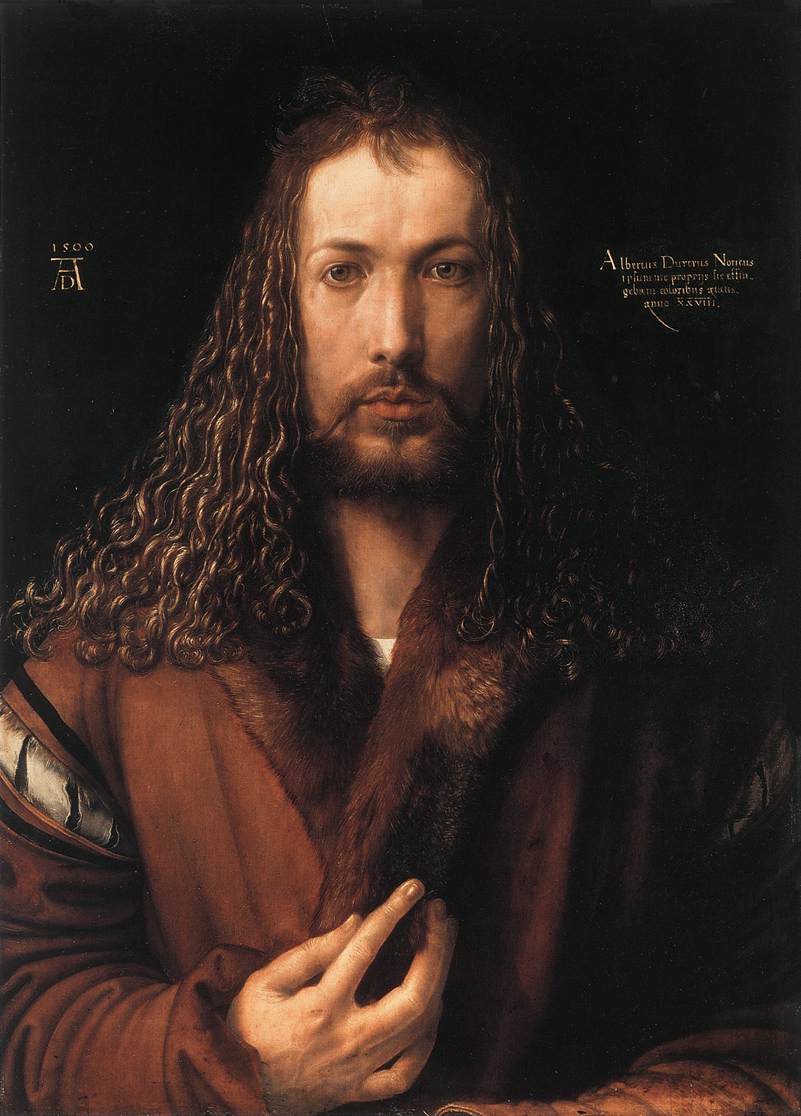
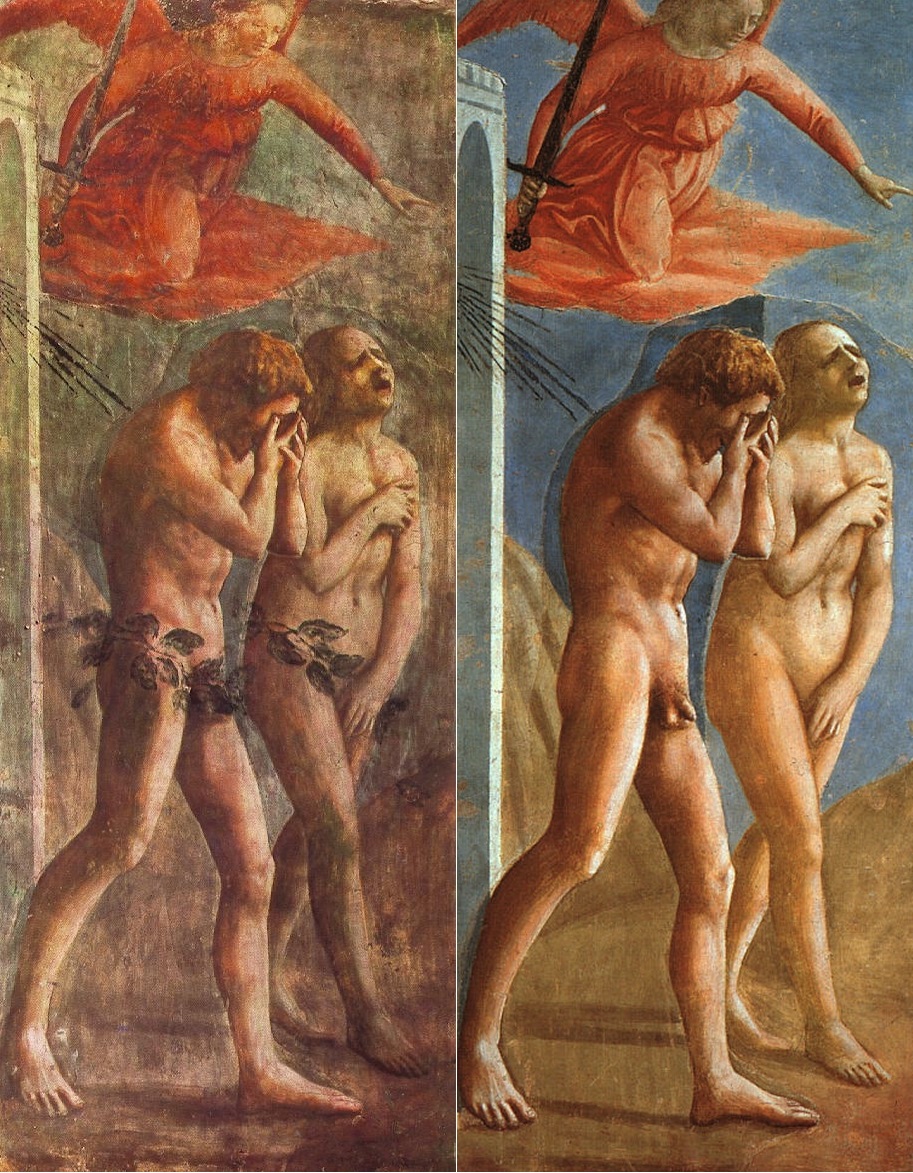
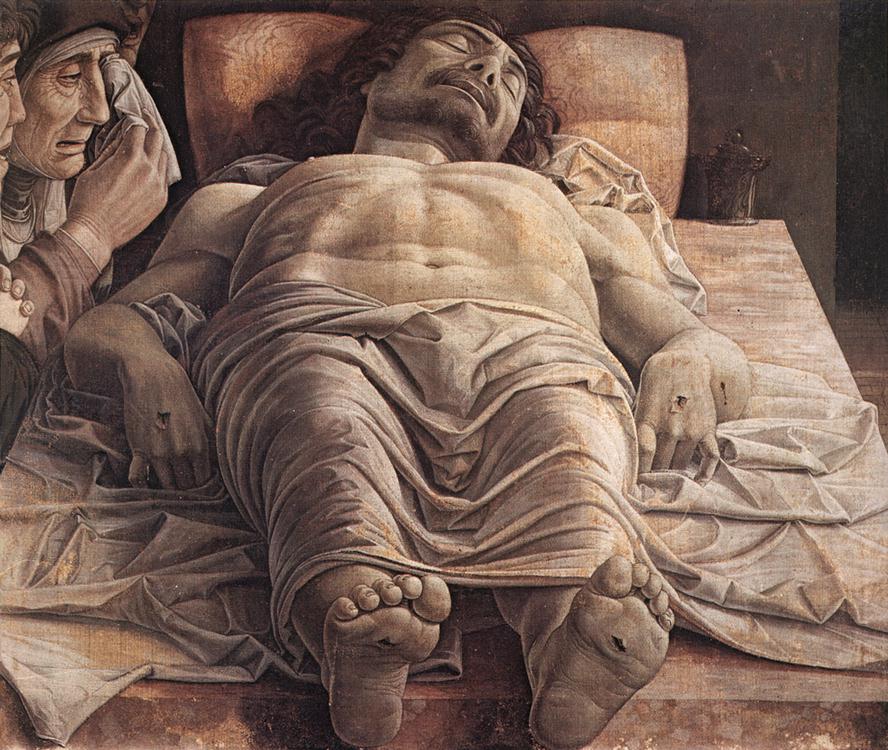
Seventh: Art history, as per my editing deadlines. As far as writing and editing (re-writing) goes, I started with Antiquity and have gotten up to the Quattrocento thus far. Major stops included Mesoamerican archaeology (of course), Byzantium, Gothic illuminations, tempera techniques, 15th century Italian painting from Masaccio to Mantegna, and (currently) 15th century art of France, Germany, and Spain. All of which are fascinating to me. Like the Ghent Altarpiece's Virgin, my twin. Or the perfect breast spheres of Fouquet's Madonna. Dürer's beguiling self-portrait. Masaccio's intense Expulsion. Mantegna's Dead Christ--aaagh, it gives me goosebumps!
The best thing about all this art history is that it has forced me to read a lot of books in order to get my source material. Which means that I'm only two books shy of my 50-books-a-year goal. Once I've gotten to fifty, I promise I'll post the list and my thoughts. After which I can read The Lord of the Rings again without guilt!
Oh, and if you wondered, the election didn't make me bat an eyelash. Lack of a landline and no television made my November wonderfully free of political advertisements. Americans have given no mandate to anyone. They want jobs, and if you start with that racist immigration crap again, Republicans, you will see one of your biggest fans give you the finger. Just balance the budget like good small-government types, pat-pat.
Happy now, Riboflavin?
First: I have had two colds, each lasting for over a week. Minimal functioning.
Second: Editing deadlines. They eat your soul.
Third: Childcare, shared with the adoring Sparrow and on the weekends, with my parental units. Thorn is a genius, but a demanding genius.
Fourth: Spare time spent freaking out about the cold and knitting scarves for babies. Also editing various writings by Sparrow and Aunt Violet.
Fifth: D&D some weekends, but a lot of travel otherwise. Went to Colonial Williamsburg with Sparrow for our tenth year together.
Sixth: I learned everything there is to know about assessment writing, DOK levels, and multiple-choice options, and wrote "the guide" on the matter for Logos freelancers.
Seventh: Art history, as per my editing deadlines. As far as writing and editing (re-writing) goes, I started with Antiquity and have gotten up to the Quattrocento thus far. Major stops included Mesoamerican archaeology (of course), Byzantium, Gothic illuminations, tempera techniques, 15th century Italian painting from Masaccio to Mantegna, and (currently) 15th century art of France, Germany, and Spain. All of which are fascinating to me. Like the Ghent Altarpiece's Virgin, my twin. Or the perfect breast spheres of Fouquet's Madonna. Dürer's beguiling self-portrait. Masaccio's intense Expulsion. Mantegna's Dead Christ--aaagh, it gives me goosebumps!
The best thing about all this art history is that it has forced me to read a lot of books in order to get my source material. Which means that I'm only two books shy of my 50-books-a-year goal. Once I've gotten to fifty, I promise I'll post the list and my thoughts. After which I can read The Lord of the Rings again without guilt!
Oh, and if you wondered, the election didn't make me bat an eyelash. Lack of a landline and no television made my November wonderfully free of political advertisements. Americans have given no mandate to anyone. They want jobs, and if you start with that racist immigration crap again, Republicans, you will see one of your biggest fans give you the finger. Just balance the budget like good small-government types, pat-pat.
Happy now, Riboflavin?
Wednesday, November 3, 2010
Weary Metaphors
"Amid a national Republican wave that also washed through conservative Texas"
"Blunt rides Republican wave to victory"
"Toomey at Helm of a Republican Wave"
"Minority candidates ride Republican wave"
And that, my friends, is only a sampling. No doubt the Republican party hopes this election represents a sea-change in American politics, but do we really have to see so many tired references to the sea? Waves upon waves upon waves, crashing onto the shore. It would be one thing if this were the particular phrase picked up by a single news outlet, but this phrase is pervasive. Will history remember this moment as the Republican wave? Or tide? Or, God save us, tsunami? I'd just like to see more variety with our metaphors, because if I have to hear about any more waves, I'm going to need a Dramamine.
"Blunt rides Republican wave to victory"
"Toomey at Helm of a Republican Wave"
"Minority candidates ride Republican wave"
And that, my friends, is only a sampling. No doubt the Republican party hopes this election represents a sea-change in American politics, but do we really have to see so many tired references to the sea? Waves upon waves upon waves, crashing onto the shore. It would be one thing if this were the particular phrase picked up by a single news outlet, but this phrase is pervasive. Will history remember this moment as the Republican wave? Or tide? Or, God save us, tsunami? I'd just like to see more variety with our metaphors, because if I have to hear about any more waves, I'm going to need a Dramamine.
Tuesday, November 2, 2010
A Day in the Life: November 2nd -- Election Day
An odd assortment of today's activities:
Frost! My car was encased in it this morning. The trusty weatherman had told me it would be cold, and he'd even hinted at frost, and so I'd planned to spend ten extra minutes outside scraping away the snow-cone fluff. Alas, my extra time was gobbled up by a fruitless search for a tie. My striped shirts are not tie friendly, unfortunately, and so the time was utterly wasted. The drive, however, was not the monotonous traffic jam that the I695 B-more Beltway tends to be on a Tuesday morning around 6:45 am. Election day means that many schools are closed. School closings mean less traffic. Less traffic means that I did get to my office before 7:30 am this morning. And what does that mean? Means I'm happy.
I handed out a bucket of candy to all of my students today. Fox and I are trying very hard to keep to our eating plans. I'm looking to fit into my jeans again. I haven't been able to since Thorn was born. Candy sitting around the house just wasn't conducive to that project. The students were thrilled to get it, and now I can say that I've contributed to a university-spanning sugar high.
Fox and I voted this afternoon. It is only the second time that we've gone down to the polling place together. Last election, Fox voted absentee, and I was alone on the long and ebullient line. This election lacked the same energy as 2008, but the people in the line were dedicated souls. Also the local election staff was kind as can be, and we got in and out in short order.
Tonight I added 2,710 words to the 863 that I wrote yesterday. The dissertation is moving right along. Something on the page every day this month. This is my November.
Lots of meetings tomorrow. Watching elections results until 10:00. I do so love democracy.
Frost! My car was encased in it this morning. The trusty weatherman had told me it would be cold, and he'd even hinted at frost, and so I'd planned to spend ten extra minutes outside scraping away the snow-cone fluff. Alas, my extra time was gobbled up by a fruitless search for a tie. My striped shirts are not tie friendly, unfortunately, and so the time was utterly wasted. The drive, however, was not the monotonous traffic jam that the I695 B-more Beltway tends to be on a Tuesday morning around 6:45 am. Election day means that many schools are closed. School closings mean less traffic. Less traffic means that I did get to my office before 7:30 am this morning. And what does that mean? Means I'm happy.
I handed out a bucket of candy to all of my students today. Fox and I are trying very hard to keep to our eating plans. I'm looking to fit into my jeans again. I haven't been able to since Thorn was born. Candy sitting around the house just wasn't conducive to that project. The students were thrilled to get it, and now I can say that I've contributed to a university-spanning sugar high.
Fox and I voted this afternoon. It is only the second time that we've gone down to the polling place together. Last election, Fox voted absentee, and I was alone on the long and ebullient line. This election lacked the same energy as 2008, but the people in the line were dedicated souls. Also the local election staff was kind as can be, and we got in and out in short order.
Tonight I added 2,710 words to the 863 that I wrote yesterday. The dissertation is moving right along. Something on the page every day this month. This is my November.
Lots of meetings tomorrow. Watching elections results until 10:00. I do so love democracy.
Monday, November 1, 2010
Foodie Love: October dishes
Reviewing October's Cooking Light.
 I have a subscription to Cooking Light magazine, and October's issue came with a must have recipe: Roasted Butternut Squash Risotto with Sugared Walnuts. Risotto is, without exaggeration, my favorite comfort food. Butternut squash is a close second. The combination of the two compelled me to attempt this recipe, despite the fact that risotto-making is often a time-consuming activity, and time is the commodity that I have least. Still, on a lovely October Wednesday, I settled down to craft this meal for our little family. Thorn cannot have wheat or dairy, and so this recipe (if you disregard the Parmigiano-Reggiano cheese) is free of both. I had hoped he'd enjoy it, too. He didn't, but Fox and I did. It was very easy to prepare, and if you've got the time, I highly recommend it. There is nothing like biting into the smooth and creamy risotto, except doing so and finding a crunchy, warm and sugary walnut!
 I have a subscription to Cooking Light magazine, and October's issue came with a must have recipe: Roasted Butternut Squash Risotto with Sugared Walnuts. Risotto is, without exaggeration, my favorite comfort food. Butternut squash is a close second. The combination of the two compelled me to attempt this recipe, despite the fact that risotto-making is often a time-consuming activity, and time is the commodity that I have least. Still, on a lovely October Wednesday, I settled down to craft this meal for our little family. Thorn cannot have wheat or dairy, and so this recipe (if you disregard the Parmigiano-Reggiano cheese) is free of both. I had hoped he'd enjoy it, too. He didn't, but Fox and I did. It was very easy to prepare, and if you've got the time, I highly recommend it. There is nothing like biting into the smooth and creamy risotto, except doing so and finding a crunchy, warm and sugary walnut!
Subscribe to:
Posts (Atom)